nodeLynk Introduction
nodeLynk™ – Plug-and-Play I²C Expansion
Simplify your hardware projects with nodeLynk, the universal I²C bus standard from NCD.
Connect sensors, relays, and controllers in seconds—no soldering, no guesswork.
👉 Just plug in. Start building.
What is nodeLynk?
nodeLynk is a physical I²C expansion standard designed to make prototyping and production easier.
- Uses standard I²C protocol (no special firmware required)
- Built on a 4-pin keyed Molex SL connector
- Supports plug-and-play sensors, relays, and modules
- Chainable – daisy-chain multiple modules with one host controller
Whether you’re using Arduino, Raspberry Pi, Particle, ESP32, or other microcontrollers, nodeLynk lets you skip the breadboard mess and get straight to building.
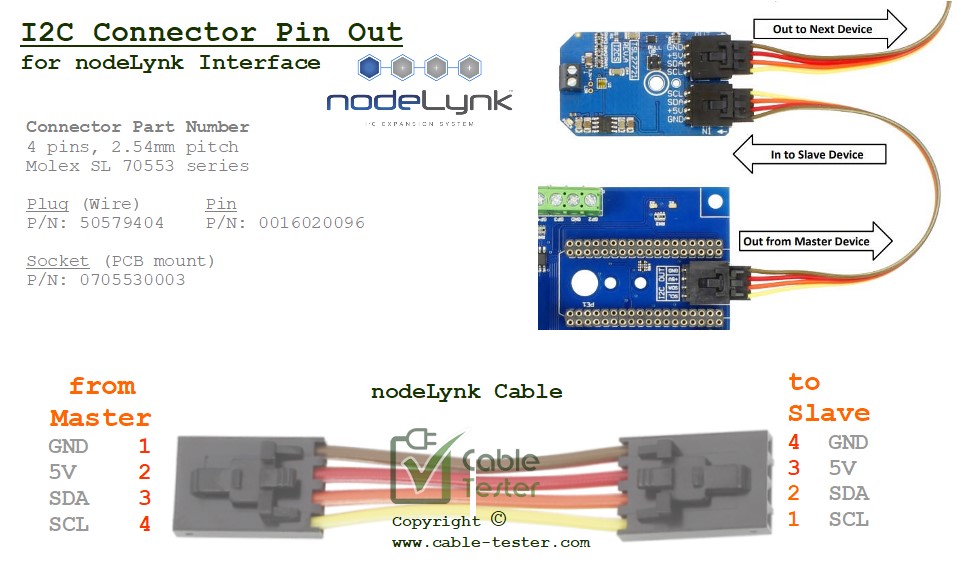
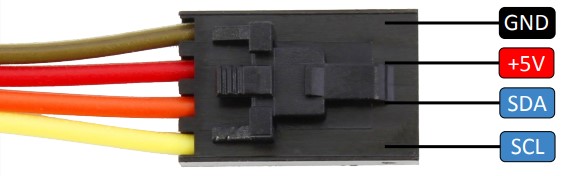
nodeLynk Pinout
Every nodeLynk connector has four pins in a fixed order:
- Pin 1 – GND (Ground)
- Pin 2 – VCC (5V)
- Pin 3 – SDA (I²C Serial Data)
- Pin 4 – SCL (I²C Serial Clock)
⚠️ Note: nodeLynk uses 5V I²C. If your controller runs at 3.3V (e.g. Raspberry Pi, ESP32), use a level-shifting adapter.
The pin order is always consistent, so nodeLynk cables work interchangeably across all devices.
Color code illustration.
Imagine a simple 4-pin connector illustration, left-to-right:
- Brown → GND
- Red → VCC (5V)
- Orange → SDA
- Yellow → SCL
Why Choose nodeLynk?
- ✅ Plug-and-Play – Skip wiring headaches with standard cables
- ✅ Universal – Works with hundreds of I²C modules
- ✅ Chainable – Add multiple devices on one bus
- ✅ Reliable – Keyed connectors prevent wiring mistakes
nodeLynk I2C connector detail
Cable Plug
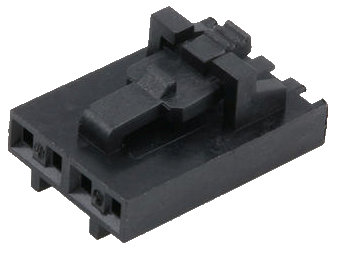
Molex plug 50579404 (pdf 0.15MB)
Board Socket
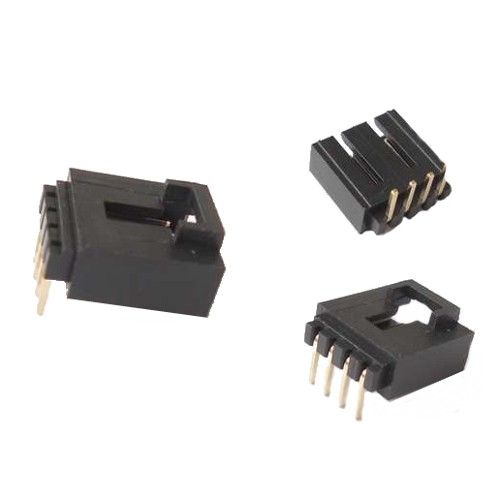
Molex socket 0705530003 (pdf 0.25MB)
nodeLynk Pinout
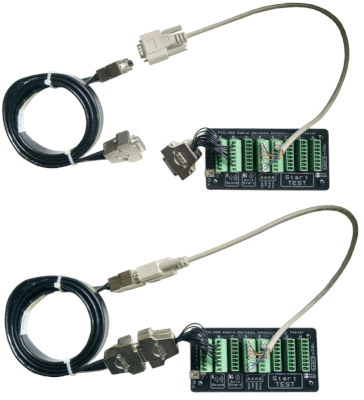
Check out our best seller general purpose Cable Tester tool.
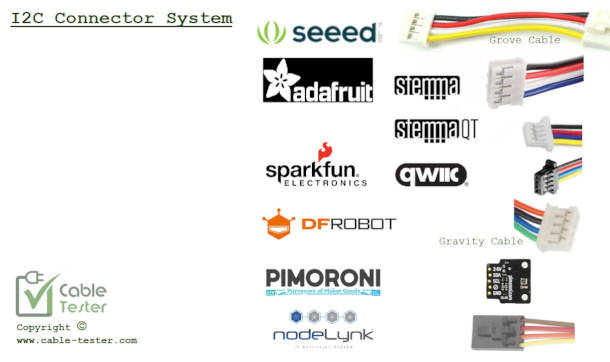
Other I2C Connector Standard.
You may also be interested in other i2c connector standard available on the market. Click here.